

Key Takeaways
- Hail damage isn’t always obvious. What looks minor may include many dents that affect repair cost and vehicle value.
- Insurance decisions depend on coverage, deductible, and damage severity. A large repair may make filing worthwhile, but the numbers and policy terms matter.
- Waiting too long can complicate a claim. Notification requirements and documentation become important after a storm.
- A professional inspection provides useful information. Understanding the damage and likely repair cost makes the decision easier.
- Repair methods matter. Paintless Dent Repair may preserve the original finish and avoid repainting when damage qualifies.
There’s a moment after a hailstorm when people walk outside, look at their vehicle, and think:
“Is this bad enough to deal with, or should I just leave it?”
It’s a fair question, and one that deserves more thought than many drivers initially give it.
Some people file claims before understanding their deductible or repair costs. Others wait too long, overlook damage, or don’t realize what their insurance actually covers.
Deciding whether to file an insurance claim for hail damage isn’t always straightforward. But understanding a few key factors can make the decision much easier.
Let’s walk through what actually matters so you can make an informed choice for your situation.
The First Question Most Drivers Ask After a Storm
Right after a hailstorm, most people aren’t thinking about repair methods or long-term vehicle value. They’re thinking:
- Will my insurance go up?
- Is this even worth fixing?
- How bad is it, really?
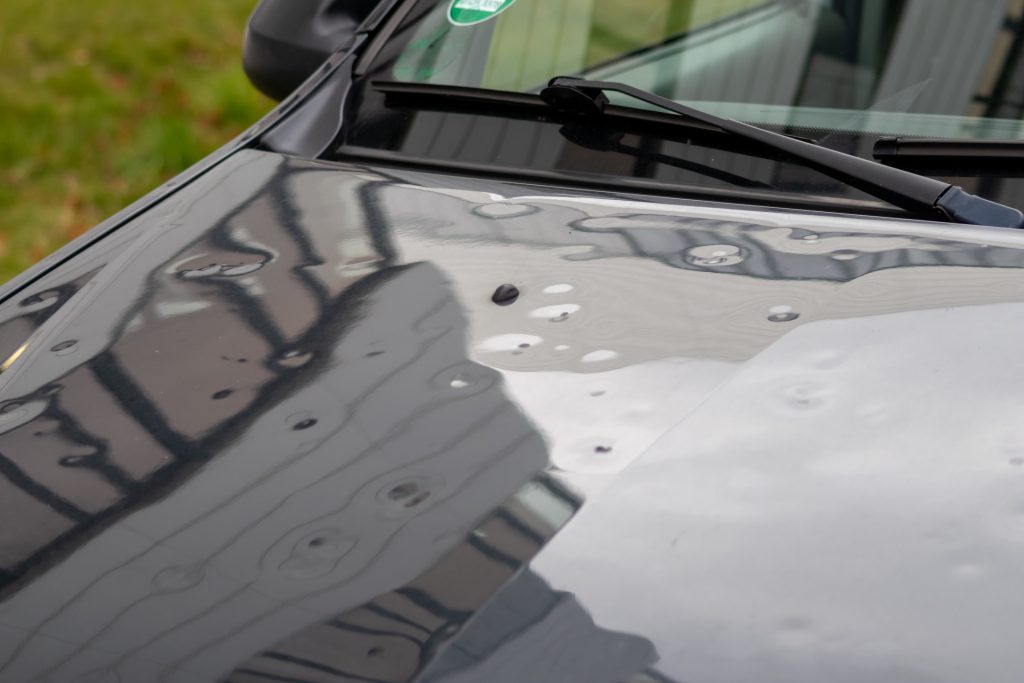
And here’s the tricky part: hail damage isn’t always obvious.
A vehicle might look fine at a glance, but under the right lighting, a technician could find dozens or even hundreds of small dents across the hood, roof, and other panels.
What initially appears to be minor cosmetic damage can add up to a substantial repair estimate.
That’s why the decision to file a claim shouldn’t be based on a quick visual check alone.
Not sure what to look for? Our complete guide to hail damage repair explains how to identify damage, understand repair methods, and decide what to do after a storm.
What Insurance Typically Covers (and What It Doesn’t)
Hail damage is generally covered under the comprehensive portion of an auto insurance policy, rather than collision coverage.
If your policy includes comprehensive coverage and the loss qualifies, your insurer may pay for covered repairs after applying your deductible and any relevant policy conditions.
Here’s the basic distinction:
- Comprehensive coverage: Generally covers qualifying weather-related damage, including hail, subject to your policy.
- Liability-only coverage: Generally does not pay to repair hail damage to your own vehicle.
- Deductible: The portion of a covered loss you generally pay before insurance contributes.
- Exclusions and limits: Your policy may contain conditions that affect the amount paid or how a claim is handled.
The biggest financial factor for many drivers is their deductible. It’s important to compare that amount with the expected cost of repair.
How Your Deductible Changes the Decision
Let’s assume your comprehensive deductible is $1,000. These are hypothetical examples of covered repairs, not actual estimates or guaranteed insurance payments.
Example A: $1,200 Repair
Covered repair amount: $1,200
Deductible: $1,000
Illustrative insurer payment: $200
Your deductible portion: $1,000
Example B: $4,000 Repair
Covered repair amount: $4,000
Deductible: $1,000
Illustrative insurer payment: $3,000
Your deductible portion: $1,000
In the first example, the potential insurance payment is relatively small. In the second, the policy could cover a much larger share of the repair expense.
Of course, other factors matter, including whether the loss qualifies, how the insurer evaluates the damage, and whether additional costs are covered.
What about insurance premiums? Hail is normally a weather-related comprehensive claim, not an at-fault collision. However, drivers shouldn’t assume a comprehensive claim can never affect future insurance costs or renewal decisions. The rules and practical effects can depend on the state, insurer, and policy.
Want actual repair-cost context? Our new Texas Hail Damage Repair Cost Guide includes published Texas pricing examples, PDR cost considerations, and insurance deductible scenarios.
For more on coverage, visit our hail damage insurance coverage resource.
When Filing a Claim May Make Sense
There are several situations where considering a comprehensive insurance claim may be worthwhile.
1. Damage Across Multiple Panels
If dents are spread across the hood, roof, trunk, or doors, repair costs can climb quickly, even when each individual dent looks small.
With a large enough covered repair estimate, the potential insurance payment may substantially exceed your deductible.
2. Moderate to Severe Hail Impact
Larger dents, broken glass, damaged trim, or widespread storm damage may require extensive repairs.
These situations are worth evaluating promptly, particularly if you have comprehensive coverage.
3. You Plan to Sell or Trade In Your Vehicle
Hail damage can reduce a vehicle’s resale or trade-in value. A prospective buyer or dealership may factor visible damage into its offer.
The decision to repair should consider the estimate, your deductible, and the vehicle’s expected value.
4. You Have a Lease or Loan
If your vehicle is financed or leased, your agreement may contain requirements concerning insurance proceeds, vehicle condition, or repairs.
Review those requirements before deciding to leave damage unrepaired.
When Filing a Claim Might Not Make Sense
Not every repair expense justifies an insurance claim. There are situations where paying out of pocket or evaluating other options may be reasonable.
1. Very Minor Damage
A couple of small dents may not justify filing a claim, especially when the estimated repair cost is less than your comprehensive deductible.
2. Repair Cost Is Close to Your Deductible
If the potential insurance payment would be relatively small, compare the advantages and disadvantages before filing.
For example, an estimated covered repair cost of $1,100 with a $1,000 deductible would result in only a $100 illustrative insurer payment.
3. Older Vehicles
If your vehicle has a relatively low market value and the hail damage is cosmetic, you may decide that some repairs aren’t financially worthwhile.
However, damaged paint, cracked glass, or other problems should still be evaluated before you assume the damage is harmless.
Even in these situations, a professional inspection can provide valuable information.
The Hidden Risk of Waiting Too Long
One of the mistakes drivers can make is postponing documentation and assuming they can address storm damage whenever it’s convenient.
Hail damage doesn’t always feel urgent, but waiting can create complications:
- Policy requirements: Insurers may require prompt notice or have other applicable claim conditions.
- Documentation: It can become harder to establish when damage occurred, especially after another storm.
- Additional damage: Broken glass or compromised paint may need attention before problems develop.
- Repair availability: Major storms can create longer inspection and repair wait times.
There isn’t one universal hail-claim deadline that applies to every auto insurance policy. Check your policy and contact your insurer promptly if you believe you have a covered loss.
For a closer look at timing and claim requirements, read The Quiet Insurance Deadline Most Drivers Miss After a Hailstorm.
Why a Professional Inspection Comes First
Here’s something many drivers don’t realize:
Not all hail damage is easy to see in ordinary lighting.
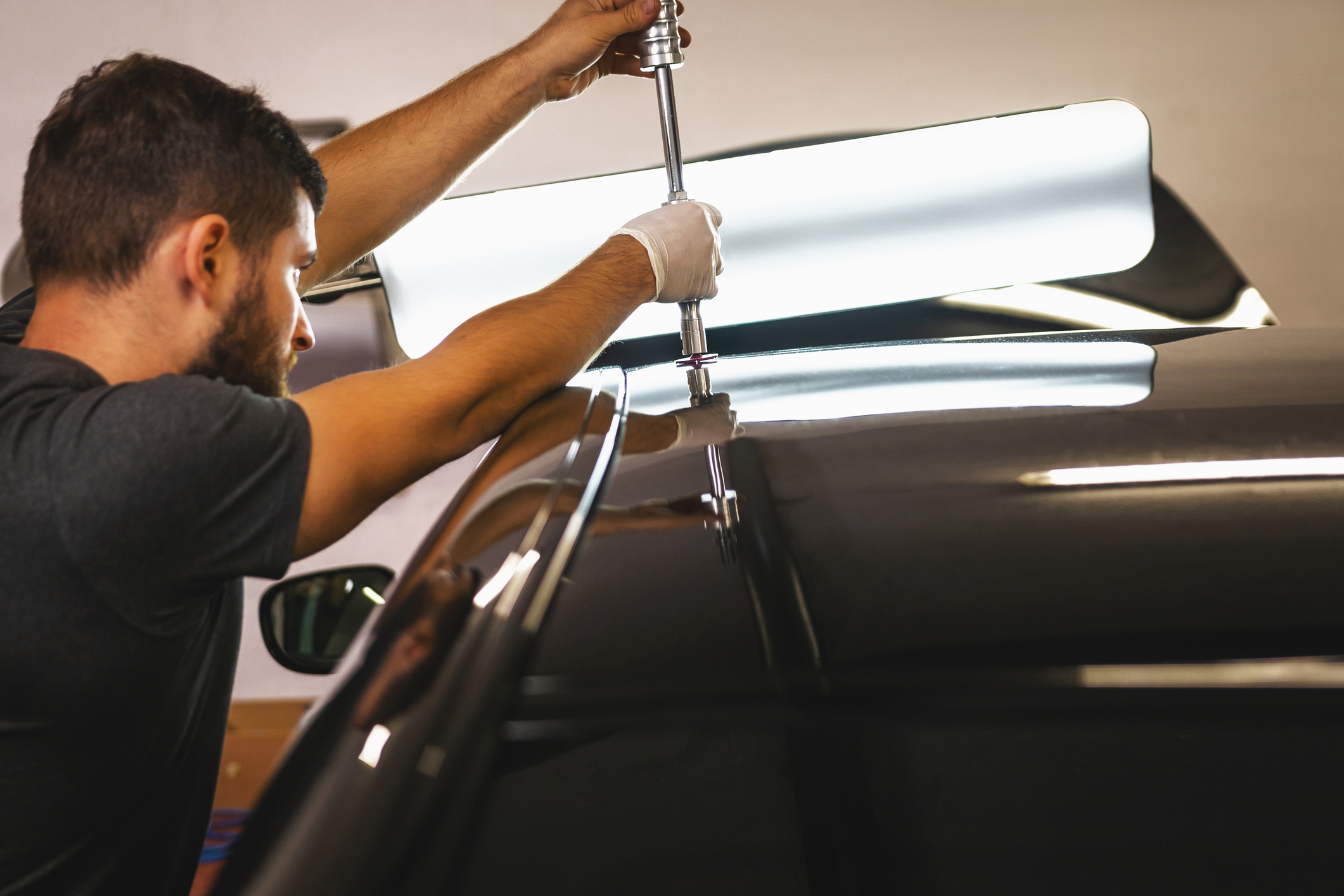
Trained technicians often use reflection boards and specialized lighting to identify small dents across vehicle panels.
A thorough inspection can help establish:
- The number, size, and severity of visible dents
- Whether paint, glass, or other components were affected
- Which areas may qualify for paintless dent repair
- The estimated cost of repairing the documented damage
- Whether the cost is likely to exceed your deductible
It’s not about committing to repairs before you understand your options. It’s about getting the information needed to make a better decision.
Keep in mind that a repair facility’s estimate and an insurer’s initial estimate may differ. Additional damage identified during inspection may require supplemental documentation and insurer review.
Common Mistakes That Can Cost Drivers Money
1. Assuming the Damage Is “Not That Bad”
A quick look under ordinary lighting may miss many small hail dents. A more detailed inspection can reveal the full extent of visible damage.
2. Waiting Too Long to Act
Delaying documentation or claim notification can make the process more complicated, particularly if additional storms occur.
3. Accepting the First Estimate Without Reviewing It
An initial estimate may not include every repair operation or all damage that becomes apparent during a more thorough inspection.
Ask questions when something appears to be missing, and understand how repair supplements are submitted and reviewed.
4. Not Understanding Repair Methods
There’s an important difference between Paintless Dent Repair (PDR) and conventional body repair.
PDR can preserve the original finish on qualifying dents. Traditional repair may be needed when paint is damaged, panels require replacement, or the metal cannot be satisfactorily reshaped without refinishing.
For a more detailed comparison, see our PDR vs. Traditional Repair Guide.
5. Assuming You Must Use the Insurer’s Recommended Shop
Texas drivers generally have the right to choose their repair facility. Your insurer may recommend a shop, but you are not automatically required to use that facility.
An insurer is not necessarily obligated to pay more than a reasonable repair amount, so disagreements about repair scope or pricing should be discussed before authorizing work.
Read our Texas Guide to Choosing Your Own Hail Repair Shop for more information.
So, Should You File a Claim?
The answer depends on your actual damage, insurance coverage, deductible, and financial circumstances.
A practical approach is to:
- Document the damage and the date of the storm.
- Review your comprehensive coverage and deductible.
- Arrange a professional inspection and request a written estimate.
- Compare the estimated covered repair cost with your deductible.
- Check policy requirements and discuss coverage questions with your insurer.
- Decide whether filing a claim makes sense for your situation.
Use the following guide to think through some common scenarios.
Should I File a Hail Damage Claim?
Five common situations and what to consider before making a decision.
Minor Dents and a High Deductible
What to consider
Start with a professional estimate. If the covered repair amount is below or only slightly above your deductible, paying out of pocket may be reasonable.
Damage Across Multiple Panels
What to consider
Widespread dents may produce a substantial repair estimate. Compare the projected cost with your deductible and review your comprehensive coverage.
Severe or Widespread Hail Damage
What to consider
Document the damage promptly, check for glass or other safety concerns, and contact your insurer about claim requirements. A professional evaluation is especially important.
Leased or Financed Vehicle
What to consider
Review your lease or loan agreement. You may have obligations concerning repairs or insurance proceeds, even if you would otherwise choose not to repair cosmetic damage.
Not Sure How Extensive the Damage Is
What to consider
Request a professional inspection and written estimate. Avoid deciding solely from a casual visual check, and don’t overlook any applicable insurance notification requirements.
Final Thoughts
Hail damage can create uncertainty long after the storm has passed. The question isn’t simply whether your vehicle has dents. It’s whether the damage, repair cost, deductible, and insurance coverage make filing a claim worthwhile.
For some drivers, comprehensive insurance may cover a substantial portion of the repair. For others, paying out of pocket may make more sense.
If there’s one takeaway, it’s this:
Don’t make the decision based only on what you think you see. Make it based on the damage that has actually been documented.
A professional inspection, a clear estimate, and an understanding of your policy can make that decision considerably easier.
Find a Hail Repair Location in Texas
US Hail Repair helps drivers connect with participating collision centers for hail damage inspections and repair options. Start with a nearby location to ask about estimates, repair methods, and current availability.
Editorial note: This article provides general educational information, not insurance, financial, or legal advice. Coverage and claim requirements depend on the specific policy and circumstances.



Pingback: Hail Damage Repair Cost in Texas: 2026 Guide