A hailstorm can turn normal operations into a large-scale inventory problem overnight. Sold units may be waiting for delivery, retail inventory can be difficult to merchandise, customer vehicles need attention, and fleet availability can quickly become an operational issue. US Hail Repair helps dealerships, collision centers, and fleet operators organize and execute hail repair around the priorities that matter most to the business.
Our dealership and fleet approach is designed around vehicle volume, repair priority, available space, and the daily workflow of the facility. Rather than treating every vehicle as an isolated retail repair, the goal is to create an organized hail response that keeps inventory moving and gives your team a clear process from inspection through final quality control.
Sold vehicles, customer commitments, high-demand inventory, and operational fleet units can be identified early and scheduled accordingly.
Repair planning can be organized around the number of damaged vehicles and the facility's available repair space after a storm.
Individual vehicle inspections and final quality checks help keep repair standards consistent across a high-volume hail event.
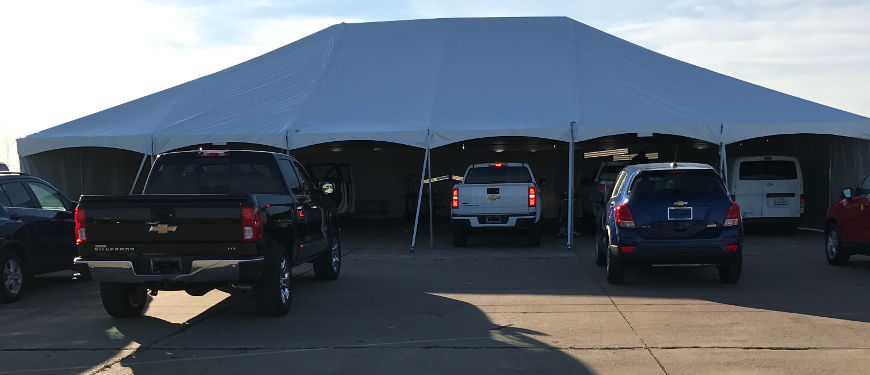
For a dealership, collision center, or fleet, hail damage is not just a cosmetic issue. It can affect vehicle availability, customer delivery dates, merchandising, internal staffing, parking and repair space, and the amount of administrative work facing the operation after a storm.
The repair strategy should reflect those differences. A strong hail plan starts by separating vehicle categories, establishing repair priorities, identifying workable repair space, and creating a consistent inspection and quality-control process.
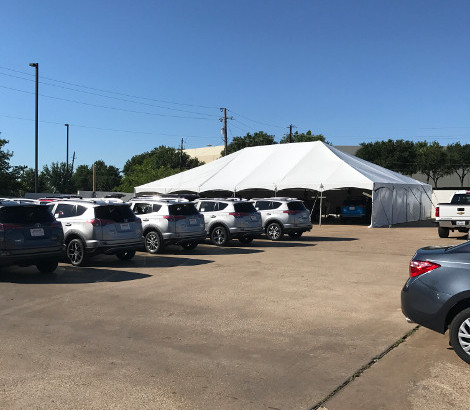
High-volume hail repair works best when the repair order reflects the business. A sold vehicle scheduled for delivery does not have the same urgency as an unsold unit at the back of inventory, and a fleet vehicle may have a different operational priority than either one.
US Hail Repair can work with the facility to establish those priorities before production begins. The objective is to create a predictable flow of vehicles through inspection, repair, quality control, and return to the appropriate department or customer.
High-volume repair does not mean averaging the damage across an entire lot. Vehicle condition, dent count, paint condition, panel material, glass damage, trim, previous repairs, and access can all change the appropriate repair plan. Learn more about Paintless Dent Repair and our guide to PDR vs. traditional body repair.
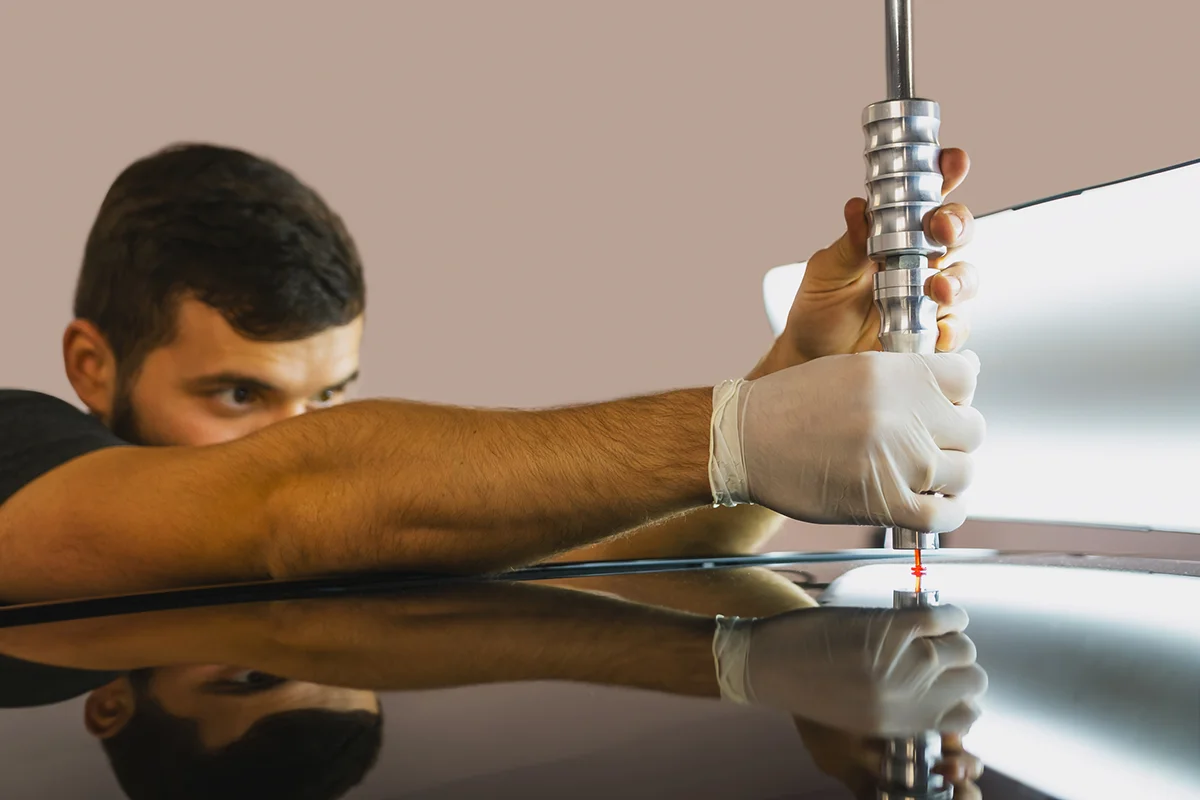
For many hail-damaged vehicles, Paintless Dent Repair (PDR) can be an efficient repair method because qualifying dents can be restored without refinishing the repaired area. That can be especially useful when a dealership or fleet is managing a large number of vehicles with intact paint.
PDR is not appropriate for every panel. Cracked paint, severe metal stretch, panel access, aluminum construction, broken glass, trim damage, and previous repairs can all change the repair approach. Vehicles may require a combination of PDR, conventional body repair, glass replacement, parts, or other work.
US Hail Repair's role is to help organize the hail-repair process around the actual condition of the vehicles rather than force every unit into the same repair method.
Large hail events can create a significant documentation burden. Repair estimates, vehicle identification, photos, damage differences, and additional repair requirements all need to stay organized as vehicles move through the process.
US Hail Repair can document repair requirements and communicate repair information as part of the shop or dealership's normal claim process. When additional covered damage or repair operations are identified after an initial estimate, that information can be documented for insurer review.
Keep vehicle-level repair information organized rather than relying on broad assumptions across an entire inventory group.
Document additional damage or necessary operations when the detailed repair assessment differs from the initial insurance estimate.
For general Texas claim information, see our hail damage insurance guide and our explanation of repair-shop choice in Texas.
Repair planning is centered on storm damage, PDR, high-volume vehicle inspection, and the workflow challenges created by a hail event.
Repair order can reflect sold units, customer commitments, inventory needs, and fleet operational priorities.
A consistent process, clear customer information, location support, and a professional web presence help reinforce confidence in the hail-repair program.
Completed vehicles move through inspection before being returned to inventory, the customer, or operational service.
PDR, conventional repair, glass replacement, aluminum repair, and parts needs can be considered as part of the overall vehicle assessment.
US Hail Repair has a growing presence across Texas, supporting hail-repair activity in multiple markets and communities.
US Hail Repair is designed to complement the facility's existing operation. The goal is not to replace the dealership or collision center's customer relationship. It is to add specialized hail-repair capacity, workflow support, and a professional process that the facility can confidently put in front of its customers and staff.
To discuss dealership, collision-center, or fleet hail repair needs, contact US Hail Repair.
See how US Hail Repair approaches high-volume dealership and fleet hail work.
Repair planning can be organized around inventory volume, operational priorities, and available repair space. Sold units, customer vehicles, retail inventory, and other categories can be prioritized based on the dealership's needs.
The repair setup can be coordinated around the facility and available space. The appropriate arrangement depends on vehicle volume, site conditions, and the repair requirements of the affected vehicles.
No. Each vehicle is evaluated individually. PDR may be appropriate for many dents, while other vehicles or panels can require conventional repair, glass replacement, parts, or another repair method.
Sold units and other time-sensitive vehicles can be identified early and prioritized so the repair schedule reflects delivery commitments and business needs.
If your dealership, collision center, or fleet is dealing with hail-damaged vehicles, US Hail Repair can discuss the volume, facility needs, repair priorities, and the type of support that makes sense for your operation.
Contact US Hail Repair to discuss dealership, collision-center, or fleet hail repair support.