
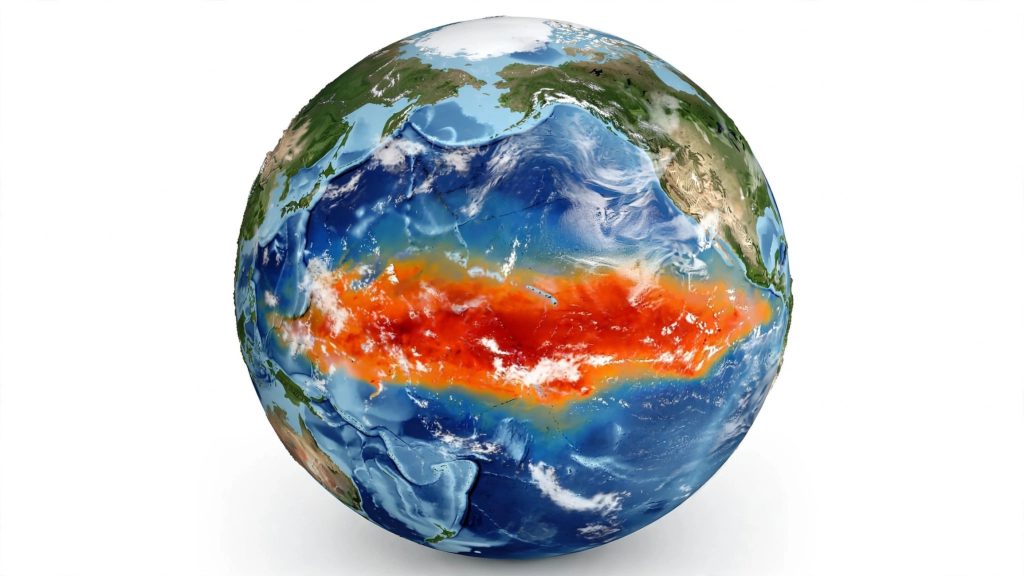

What does unusually warm water in the Pacific Ocean have to do with hail-damaged cars in Texas? More than you might expect. As El Niño strengthens in 2026, weather researchers are watching changes in ocean temperatures, tropical winds, and the jet stream that can influence weather far beyond the Pacific.
For drivers across Dallas-Fort Worth and the rest of Texas, it’s worth understanding the connection. But there is an important catch: a stronger El Niño does not automatically mean more Texas hailstorms. Let’s look at what scientists know, what remains uncertain, and what vehicle owners can do before the next severe-weather season.
Watch: Understanding Kelvin Waves
This Facebook Reel offers a visual introduction to Kelvin waves, one of the ocean processes associated with El Niño. The scientific explanations below are based on NOAA research and forecasts.
Watch the Kelvin wave video directly on Facebook if the player doesn’t appear on your device.
What Is El Niño?
El Niño is the warm phase of a natural ocean-and-atmosphere pattern called the El Niño–Southern Oscillation (ENSO). During El Niño, unusually warm water develops across parts of the central and eastern tropical Pacific, while trade winds and tropical rainfall patterns shift. Those changes can influence atmospheric circulation and storm tracks around the world.
In the United States, El Niño’s effects are often most noticeable during winter. The southern tier of the country, including parts of Texas, can experience wetter-than-average conditions as the jet stream changes position. But seasonal tendencies are not guarantees for any particular city or storm. NOAA explains the broader ENSO pattern here.
What Is a Kelvin Wave, and Why Does It Matter?
An oceanic Kelvin wave isn’t the kind of wave that curls and breaks at the beach. It is a broad, relatively low-profile movement through the upper ocean that can travel thousands of miles along the equator. In the Pacific, these waves can move warmer water eastward and push the boundary between warm surface water and cooler deep water farther down.
Think of a Kelvin wave as a way the ocean redistributes heat. When trade winds weaken or change, warm water that has accumulated in the western Pacific can move toward the east. This process can help develop or reinforce the warm-water conditions associated with El Niño.
According to NOAA’s October 6, 2026 explanation of Kelvin waves, one wave was progressing along the North American West Coast in early October, with additional waves still in the tropical Pacific. NOAA describes these waves as traveling approximately 6 miles per hour, or around 150 miles per day.
The important distinction: Kelvin waves do not travel into Texas and directly create thunderstorms. Their relevance to Texas comes through the larger El Niño system and its influence on atmospheric patterns.
Why El Niño Is in the News in October 2026
On October 8, 2026, NOAA’s Climate Prediction Center reported that El Niño was continuing to strengthen. Its advisory placed the chance of strong-to-very-strong El Niño conditions during January–March 2027 above 83%.
That is a forecast for the Pacific climate pattern—not a forecast that Dallas, Fort Worth, or any specific Texas community will experience a particular number of hailstorms. NOAA updates its outlook as new ocean and atmospheric observations become available. You can follow the latest official ENSO advisory for changes.
Could El Niño Affect Texas Hailstorms in 2027?
Potentially, but the connection is more complicated than “warmer ocean equals more hail.” Texas severe thunderstorms depend on several ingredients coming together, including moisture, atmospheric instability, lift, and wind patterns. A change in the jet stream may influence where and when those ingredients overlap, but it cannot tell us today whether a particular neighborhood will have hail next spring.
In fact, a study published in Nature Geoscience found that spring hail and tornado activity has historically tended to be lower in parts of the central and southern United States during El Niño than during La Niña. NOAA summarizes those findings and cautions that seasonal patterns should not be treated as individual storm forecasts. The relationship is also less clear in summer.
That doesn’t mean Texas drivers can ignore hail during El Niño. A region can experience fewer severe-weather events overall and still suffer an expensive storm. A single concentrated hailstorm can damage thousands of vehicles, especially when it passes through a densely populated area or a large cluster of dealerships and parking lots.
So while El Niño is worth watching, local forecasts, watches, warnings, and actual storm tracks are far more useful for decisions about protecting your vehicle on a particular day.
For a closer look at the research, see NOAA Climate.gov’s discussion of El Niño, La Niña, hail, and tornado frequency.
Why Hail Repair Demand Can Still Surge in an El Niño Year
US Hail Repair works with participating collision centers across Texas, so what matters to repair demand is not simply the number of storms statewide. Where a storm hits, how large its hailstones become, how many vehicles are exposed, and how widespread the damage is can have an enormous effect on repair needs.
For example, one storm moving across a crowded Dallas-Fort Worth commute corridor could generate substantial hail damage, while several storms over sparsely populated areas might result in fewer insurance claims and repairs. That distinction is one reason individual business experience may not match a broad regional climate average.
We can’t know yet whether the 2027 hail season will be especially active for any particular US Hail Repair partner facility. We can, however, prepare for severe weather regardless of the seasonal outlook.
How Texas Drivers Can Prepare Before Hail Season
- Know where to park. Identify a garage, covered parking area, or other safe option you can use when hail is forecast.
- Watch local weather alerts. Pay attention to National Weather Service watches and warnings, especially when severe thunderstorms are approaching your area.
- Review your insurance coverage. Hail damage is often covered under comprehensive auto insurance, subject to the terms, deductible, and exclusions of your policy.
- Document your vehicle’s condition. Current photos can be useful if you later need to describe or document storm damage.
- Know where to seek an inspection. Having a trusted hail repair option in mind can make the process less stressful after a storm.
If your vehicle has already been hit, our hail damage insurance coverage guide explains common coverage and documentation considerations.
What Should You Do If Hail Damages Your Car?
When conditions are safe, photograph the vehicle from several angles and take close-up pictures of dents, glass damage, and damaged trim. Keep any relevant weather and insurance information together. Avoid trying to press dents out yourself; do-it-yourself attempts can make repairs more difficult.
Many hail dents can be repaired using Paintless Dent Repair (PDR) when the original paint is intact and the affected panels are accessible. More severe damage may require glass replacement or conventional collision repair. A professional inspection can help determine the appropriate approach.
US Hail Repair connects Texas vehicle owners with participating collision centers for hail damage repair, inspection, and repair planning. Rather than operating every facility itself, US Hail Repair works through an approved partner network, helping drivers find a convenient location.
Find a US Hail Repair Partner Near You
When hail damages your vehicle, the next step is finding a convenient, qualified repair facility. Explore the partner network across Texas or start with a location near you.
Find a Repair Location
Call (800) 715-2032
Explore Dallas-Fort Worth, Dallas, or Fort Worth hail repair options.
Frequently Asked Questions
Does El Niño cause hailstorms in Texas?
No single climate pattern directly causes every local hailstorm. El Niño can influence larger weather patterns, but individual Texas hailstorms depend on local atmospheric conditions.
Will Texas have more hail in spring 2027 because of El Niño?
There is no reliable basis for making that claim now. Historical research has generally associated El Niño with fewer spring hail events in parts of the south-central United States, but damaging storms remain possible.
Is a Kelvin wave the same thing as El Niño?
No. Kelvin waves are oceanic disturbances that can help move heat across the equatorial Pacific. El Niño is a broader ocean-atmosphere climate pattern involving warmer Pacific waters and changes in winds and rainfall.
Can Paintless Dent Repair fix hail damage?
Often, yes. PDR can repair many dents without repainting when the vehicle’s original paint is intact and the dent shape and panel access make the method suitable.
Sources and Further Reading
- NOAA Climate Prediction Center: ENSO Diagnostic Discussion (October 8, 2026)
- NOAA Fisheries: Kelvin Waves, Explained (October 6, 2026)
- NOAA: Understanding El Niño and ENSO
- NOAA Climate.gov: El Niño and La Niña Affect Spring Tornadoes and Hailstorms
- Allen, Tippett & Sobel: Influence of ENSO on Tornado and Hail Frequency in the United States, Nature Geoscience (2015)
Weather outlooks describe probabilities and broad climate patterns, not guaranteed local outcomes. For urgent severe-weather information, follow your local National Weather Service office.