

Certified PDR Technicians
When you see “certified PDR technicians,” the real value is confidence: you’re trusting your vehicle’s panels, paint finish, and resale value to someone with verified training, consistent technique, and quality standards. At US Hail Repair, our technicians are trained in modern Paintless Dent Repair (PDR) methods and follow a repeatable process designed to deliver clean results, especially after hailstorms where hundreds of dents can hide across the hood, roof, and trunk.
This page breaks down what “certified” should mean, how skilled PDR work protects your factory finish, and what to look for when choosing a hail and dent repair team.
What “Certified” Should Mean
1. Verified training & continuing education
PDR isn’t a “watch one video and try it” skill. Quality technicians develop tool control, metal movement knowledge, and lighting technique through formal training and ongoing practice, especially for complex areas like body lines, edges, and aluminum panels.
2. The right tools (and the right lighting)
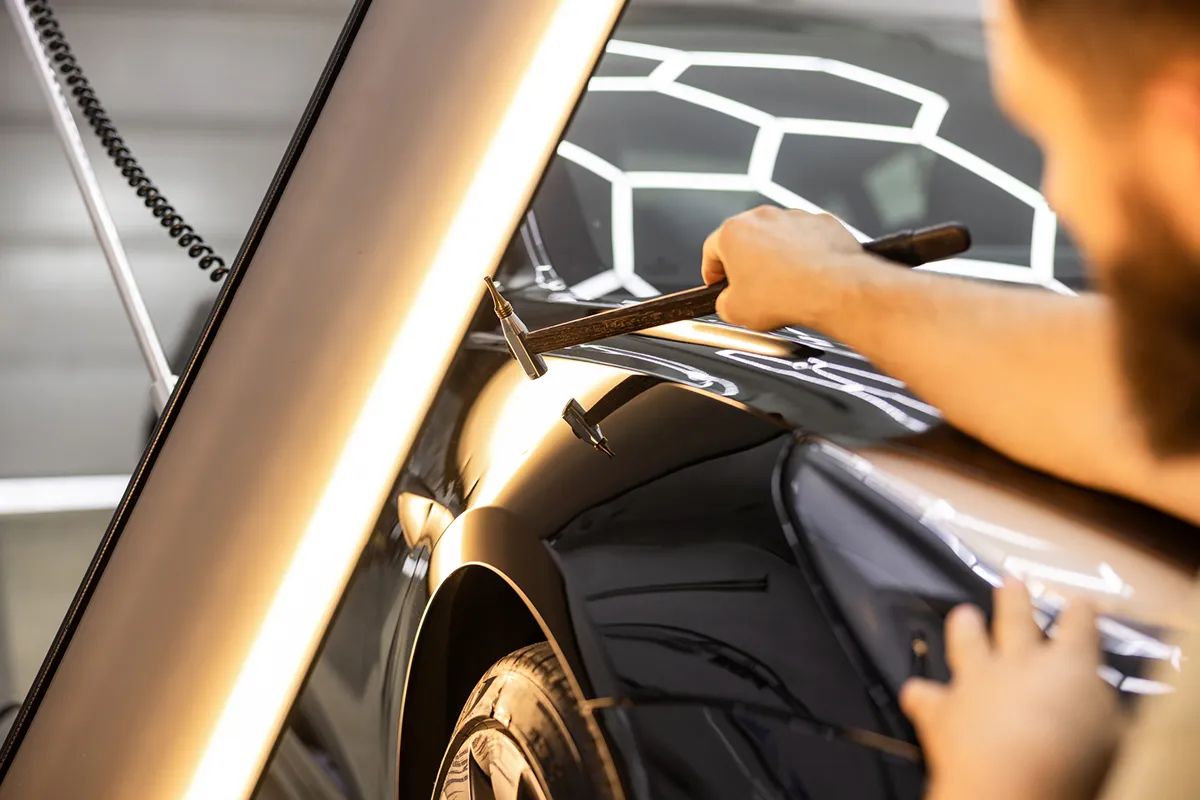
Great PDR relies on leverage tools, glue pulling systems (when appropriate), and professional lighting boards that reveal the true shape of the dent. This is how a technician can restore a panel precisely, without sanding, filler, or repainting.
3. Consistent standards & quality checks
“Certified” should also reflect process. Repairs should be checked under proper light, from multiple angles, and against panel contours to confirm the metal has returned as close as possible to its original shape.
Why It Matters for Hail Damage
Hail damage is different from a single door ding. A vehicle may have dozens—or hundreds—of impacts across large, curved panels. The goal isn’t just “better than before.” The goal is a repair that looks right in bright sun, under shop lights, and at every angle, while keeping the factory finish intact whenever possible.
- Preserves original paint: Quality PDR avoids repainting and helps maintain factory finish.
- Protects resale value: A clean repair reduces visual evidence of prior damage.
- Prevents shortcuts: Training and standards reduce the odds of over-pushing, cracking clear coat, or distortion.
- Improves consistency: Large hail jobs require repeatable technique across the entire vehicle.
How Our Technicians Approach a Repair
1. Panel evaluation
We inspect dent depth, location, metal type, and access points. This determines the best technique—push-to-paint, glue pull, or a combination, while prioritizing your factory finish.
2. Precision reshaping
Using controlled pressure and proper lighting, dents are gradually massaged back. The goal is smooth contour restoration, not quick force.
3. Quality inspection
Repairs are checked under multiple light sources and angles to ensure consistency across the full panel. When the job is complete, you receive documentation and warranty support where applicable.
Need a Repair Team You Can Trust?
US Hail Repair partners with trusted dealerships across Texas to make drop-off and scheduling simple. If you’ve recently had hail damage—or you’re seeing dents you didn’t notice at first—reach out and we’ll help you understand the next step.

(800) 715-2032

Hours: Mon–Fri, 9:00am–6:00pm